What Jimothy Can Teach Vermont About Dignity
Note: posts by individual GMDSA members do not necessarily reflect the views of the broader membership or of its leadership and should not be regarded as official statements by the chapter.
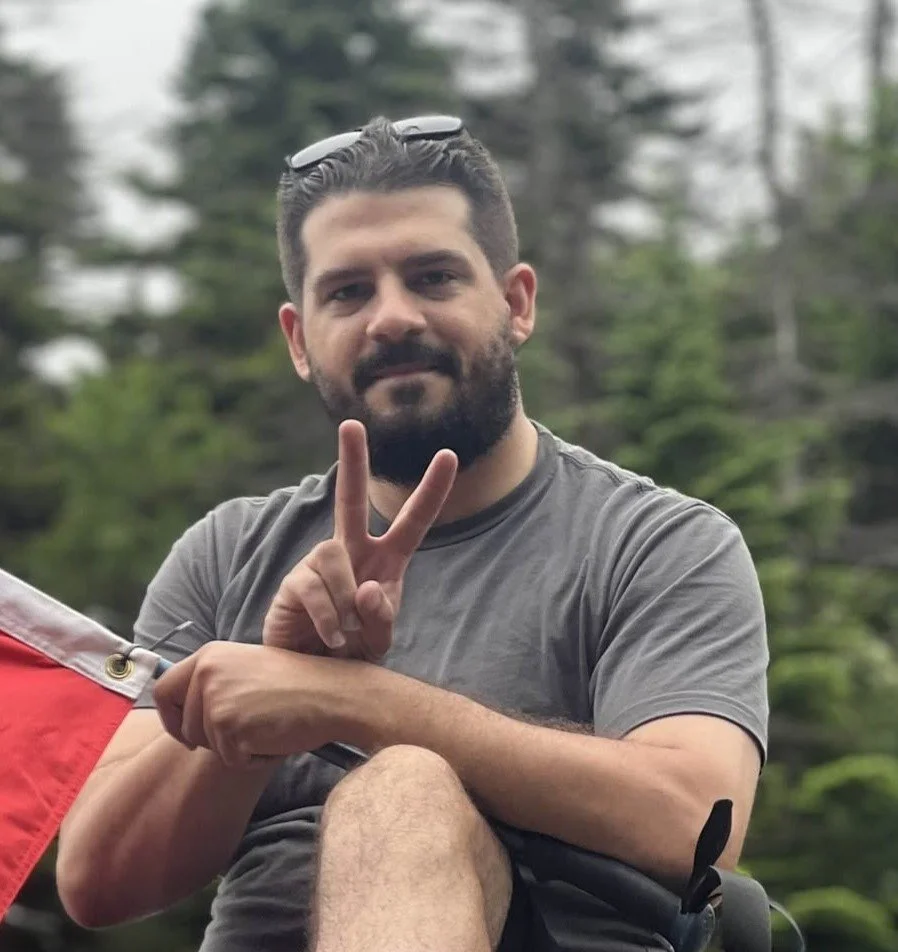
Photo Credit: Kiana Hall
For the past few weeks this summer, a round and lanky raccoon named Jimothy stole the hearts of everyone on the internet.
Millions of people shared videos of his unusual body. Artists drew him. People made plushies, memes, and some people even got tattoos of the unlikely internet celebrity. He was showered in compliments, described as adorable and perfect. His difference wasn't something to hide, it became the very reason people celebrated him.
Wildlife experts believe Jimothy may have a rare congenital condition known as short spine syndrome, which causes the spine to be shortened or compressed, giving affected animals their distinctive appearance. He doesn't look like or move like other raccoons. Yet the overwhelming reaction wasn't disgust or ridicule. It was affection.
Watching the world embrace Jimothy has been heartwarming. It has also left me wondering why we find it so much easier to celebrate differences in animals than in humans.
One in four Vermonters lives with a disability. They don't become internet celebrities when they move differently, speak differently, or navigate the world with mobility aids. More often, they encounter inaccessible buildings, employers that fail to provide reasonable accommodations, housing that doesn't meet their needs, transportation systems that leave them behind, and public policies that treat disability as an afterthought.
This is not to compare disabled people to animals.
Disabled people are our coworkers, neighbors, classmates, friends, and family members. They have dreams, ambitions, frustrations, talents, and opinions as varied as anyone else's. They do not need to become symbols of inspiration or objects of pity. They deserve something much more meaningful. They deserve dignity.
Dignity is more than being treated politely. It means having the freedom to participate fully in your community: to work if you choose, to find housing you can access, to participate in public life, to visit friends, to raise a family, and to live independently. Those freedoms depend not only on personal kindness, but on a society we build together.
Too often, discussions about disability begin and end with kindness. Kindness matters, but kindness alone cannot build a wheelchair-accessible apartment. It cannot guarantee reliable public transportation. It cannot eliminate policies that force people to choose between accepting a better-paying job and losing the benefits that allow them to survive. Those are political questions.
The disability rights movement has long argued that many of the greatest barriers disabled people face are not created by their bodies but by the society built around them. Disability is a natural part of the human experience. Any one of us can become disabled through illness, injury, or simply living long enough. The question is not whether disability exists. The question is whether we choose to build communities where everyone can participate fully.
Here in Vermont, we like to think of ourselves as good neighbors. Often, we are. But being a good neighbor means more than holding the door open. It means building towns where every neighbor can actually get through the door.
Across our state, disabled Vermonters continue to encounter inaccessible housing, gaps in transportation, limited employment opportunities, and public spaces that too often exclude rather than include. These are not inevitable realities. They are the result of public choices about funding, infrastructure, housing policy, transportation, education, and labor.
The same is true of poverty. Many disabled Vermonters live with the constant fear of the "benefits cliff," where earning a little more money can mean losing healthcare or other essential supports before wages are high enough to replace them. A promotion, an extra shift, or a better-paying job should be a path toward greater independence, not a financial trap. Instead of encouraging growth, these policies can punish people for succeeding.
Housing tells a similar story. People experiencing disability are disproportionately vulnerable to housing insecurity and homelessness. As Vermont continues to confront its housing crisis, accessibility cannot be treated as an optional feature added after the fact. Safe, affordable, accessible housing is not a luxury. It is a prerequisite for participating in community life.
Jimothy reminds us of something beautiful about ourselves. Our first instinct was compassion. No one demanded that he change before he deserved affection. No one suggested his body made him less worthy of existing. People simply accepted that he belonged.
Imagine extending that instinct beyond a viral raccoon.
Imagine a Vermont where every sidewalk, school, apartment building, workplace, and public meeting was designed with disabled people in mind from the beginning instead of retrofitted later. A Vermont where nobody had to choose between employment and healthcare. A Vermont where disability was treated not as an individual burden but as a shared responsibility to remove unnecessary barriers.
That vision requires more than goodwill. It requires investing in accessible housing, reliable public transportation, universal healthcare, strong labor protections, and public services that allow everyone to participate fully in civic life. It requires recognizing that dignity is not something earned through productivity or independence. It belongs to every person simply because they are a person.
Loving Jimothy costs us nothing.
Building a Vermont where disabled people can live with security, independence, and dignity will require resources, political courage, and collective action.
One is a viral moment. Viral moments fade, the values they reveal don’t have to.
The compassion we showed Jimothy is worth celebrating. The challenge now is extending that same instinct to our neighbors and building a Vermont that reflects it.